The Detox

Burnout is a slippery beast.
I hit burnout somewhere in early April of 2025. Maybe late March.
It looked different than how we usually talk about it. I was still showing up for work. I was not putting in fewer hours. I was putting in all the hours.
Some of that happened way early on, not so much the result of burning out as the removal of protective factors. I stopped going to the gym. This newsletter went on unannounced hiatus as I stopped writing, both for myself and for an audience. My warm contacts and clients got cooler.
But something shifted around February. A project under my purview had been shelved after over a month of effort, having run into too many tech debt shaped blockers to cleanly integrate without functional regressions. The long-tenured principal departed, leaving me one of the most senior folks there despite about six months of context. And my next project was designed, committed, and had a tentative delivery date, despite my not being certain about what landmines may have lain ahead.
The hand dealt
Any project, any client, any job will have lessons to take away. I’ll get to those with time as this newsletter resumes. But for purposes of talking about my trajectory, here’s what actually mattered:
- My positioning was compromised and, relatedly, my confidence was shaken;
- I didn’t have the context to push back on the project definition with data, nor the confidence to push back with experience;
- My only remaining lever was sheer effort.
All of this didn’t necessarily doom the project. (Like a good poker player, let’s discuss inputs and decisions, not the outcome.) But it did set me firmly on a burnout trajectory, and it didn’t take long to get there.
A new vision of burnout
My prior take on burnout was that of bleak, unenergetic cynicism–of finding myself physically unable to look at a computer screen, struggling to get out of bed, that sort of thing. Most of it would map to depressive elements. And yeah, I had some depressive tendencies going on.
But I’d thought that burnout looked like Tired Batman.
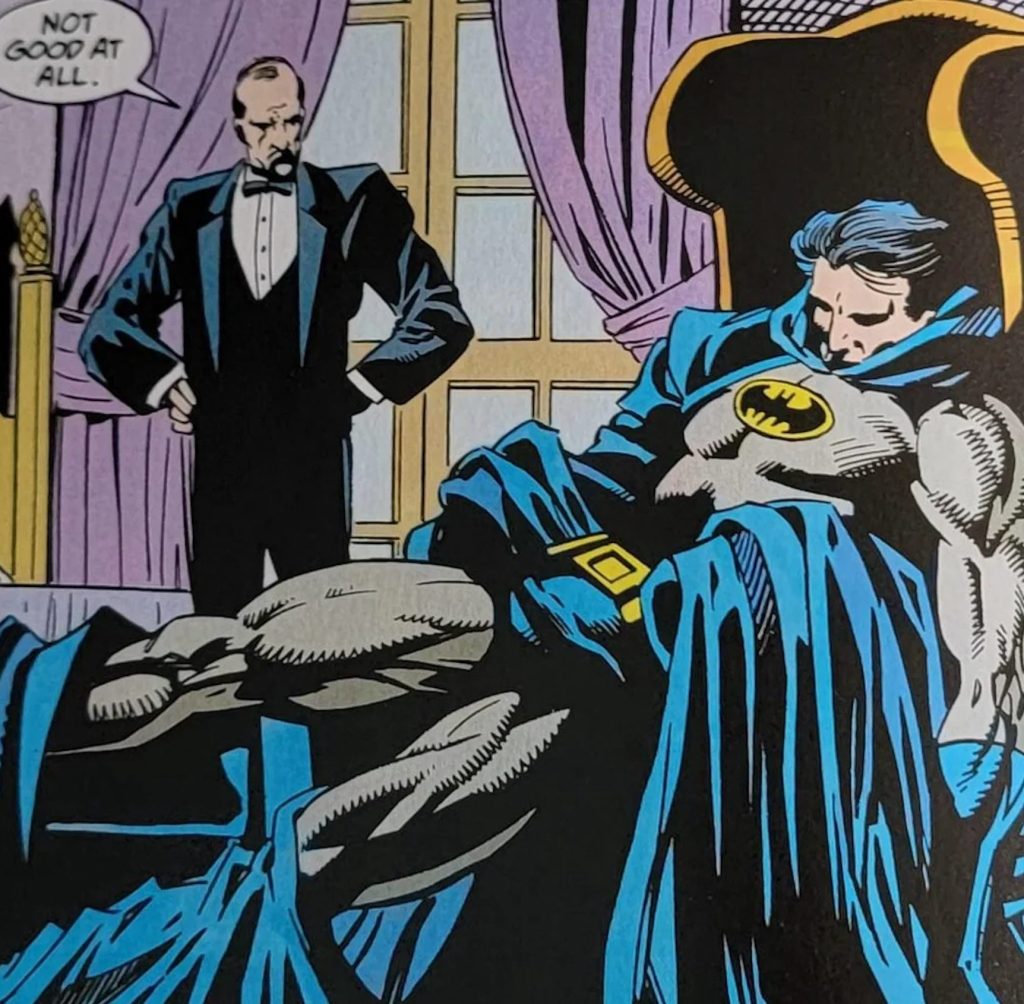
Me? Nope. Still at my desk, frantically slinging code.
Twas the shame wot dunnit
Like most burnout self-diagnoses, by the time I started to catch on, I was neck-deep. It was a slow death by shame, not by exhaustion. I was increasingly certain I was letting down my team and setting them up for failure; my ability to make confident estimates was increasingly compromised; I’d started to deflect when things went wrong instead of getting curious to diagnose.
“I’ll tell you what the human soul is, Mary,” he whispered, his eyes closed. “Animals don’t have one. It’s the part of you that knows when your brain isn’t working right. I always knew, Mary. There wasn’t anything I could do about it, but I always knew.” – Kurt Vonnegut, Galápagos
My “something is off in my brain” moment in reflecting after a conversation in which someone had asked me to self-evaluate in my abilities to apologize and repair after dropping the ball. Objectively, this is something that I am skilled at, a direct beneficiary of years of therapy both in and out of relational contexts. Yet when asked about this, I’d responded that I was failing at it and that it was something I wasn’t good at.
I’d responded entirely out of shame, and none at all out of being present. My body was there; my fingers played across the keys, moving code and plans; my face appeared on all the meetings. But my self was ducked behind a young protective factor.
From the outside, I looked…stressed. But was my growing absence professionally visible? Probably not.
With this retreat into a small version of myself, I’d unknowingly drawn The Detox. By late May, I found myself out of a job, utterly spent, and having to do the work of draining the poison from myself before I had any business looking for The Next Incredible Journey. No, before that, I was bound for The Woods.
We think of burnout as legible, visible from inside and out. It is not always so. My burnout looked like trying, and felt like failing.
